Curious Science Writer Publishes Journal Article
Our Curious Science Writers are not only curious, they’re also remarkable students!
High school student Tara Prakash attended last year’s science writing Boot Camp. Afterwards she wrote an article about nonhuman primate research aimed at helping us better understand and treat autism, a story which should hit the cSw website in the near future. Tara also authored a blog post about the 2022 Boot Camp, providing future prospective students with an inside view.
But that’s not all!

Last month the Journal of Student Research published a scientific article authored by Tara. The title: “Zebrafish Demystify Human Skin Color Variation and Develop a Basis for Pigmentation.” The full article is posted online (no membership required). You can find it at this link.
Congratulations Tara!
Looking back at Biomedical Research Awareness Day 2023
Based on all indicators, Biomedical Research Awareness Day 2023 was another smashing success. Once again, we witnessed broad, worldwide participation including:
- More than 230 registered events around the world, topping all previous records and making 2023 the biggest BRAD to date.
- International participation in the United Kingdom, Nigeria, Pakistan, New Zealand, Ireland, Canada, and Germany.
- A wide variety of engaging and educational events such as lectures, facility tours, information booths, classroom visits, interactive games for staff and attendees, online engagement, distribution of educational materials, giveaways and more.
- Over 700 registrations for this year’s official BRAD webinar featuring Dr. Tania Roth of the University of Delaware. In many cases, groups ranging from 10 to over 150 people gathered to watch the event.
We’ve highlighted several regional celebrations on the BRAD Facebook page. We were also pleased to see several posts from research organizations taking part in the annual event as well.
Here’s a brief video highlighting just a few of the hundreds of celebrations worldwide:
Don’t forget that Biomedical Research Awareness Day was designed to take place any time of the year. So if your institution was unable to participate on April 20th, you don’t have to wait another 12 months! Plenty of free resources, including several newly developed items, can be found on the BRAD website.
Finally, one more big thank you to all of our 2023 sponsors:

We could not have done it without you!
Missed the BRAD Webinar? Watch It on Replay!
 Thursday April 20th, 2023 was Biomedical Research Awareness Day. We hope many of you work at institutions that take part in this increasingly popular outreach and education event created by AMP.
If you didn’t have a chance to attend a BRAD activity, it’s not too late. This year’s BRAD webinar is available via replay. Just click this link and fill out the registration form to watch it.
This year’s presenter is Tania Roth, Ph.D., Professor and Chair of the Department of Psychological and Brain Sciences at the University of Delaware. She explains how nonhuman animals provide vital information that helps us understand how early-life experiences can significantly affect development and lifelong health. This year’s webinar also includes a rat tickling demonstration by Megan Gerhardt of Alexion Pharmaceuticals, which is AstraZeneca’s Rare Disease Unit.
We hope you can find the time to watch this outstanding presentation.
Upcoming AMP Webinar: Post-COVID Challenges, Hurdles and Solutions in Lab Animal Care Settings
 The next program in the AMP Outreach and Communications Webinar Series, our first of 2023, is coming in May.
Tuesday , May 2, 12 p.m. ET
Post-COVID Challenges, Hurdles and Solutions in Lab Animal Care Settings
COVID-19 has ushered in several life-changing impacts, especially within biomedical research settings. And many of the pandemic’s effects continue today. These include:
- Continued recruitment and retention issues.
- Engagement problems created by the increased use of online meetings.
- Morale challenges that surfaced during the pandemic and continue to exist.
- Training issues: In-person vs. online and additional technology hurdles.
- Supply shortages, supply chain problems.
AMP will host a panel discussion with senior lab animal experts in both academic and business settings to discuss how they’ve addressed and continue to manage these issues using creative strategies, many of which will likely assist a wide range of research organizations.
Audience members will be invited to share their own, additional post-COVID challenges for an open discussion about possible solutions.
Click this link to sign up. Note: Please sign up using a work-associated email address so that we can verify you are affiliated with a biomedical-science organization.
Remembering Former AMP Board Chair Dr. John Young, VMD, MS, DACLAM
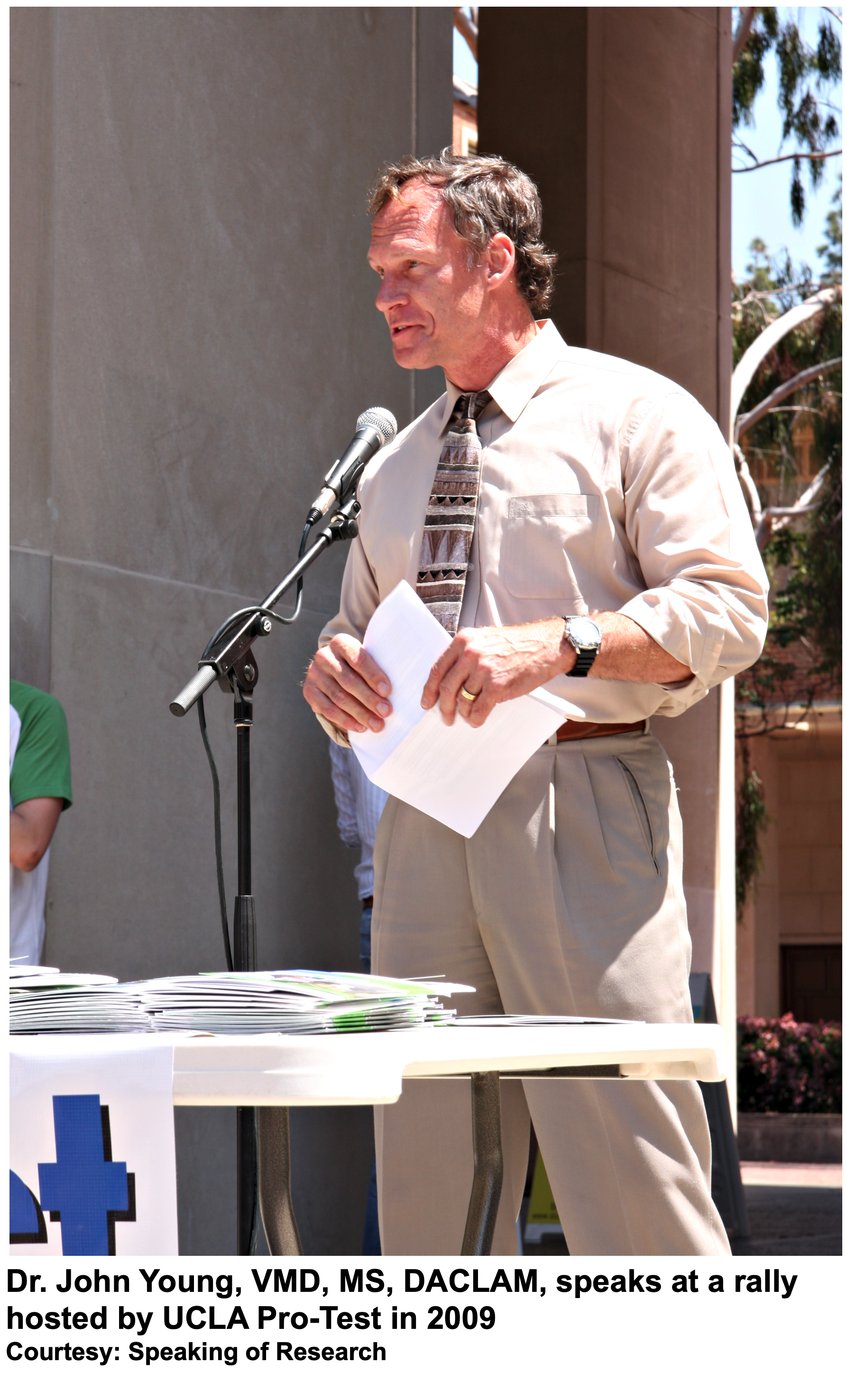 All of us at Americans for Medical Progress, employees and board members alike, are mourning the loss of former AMP Board of Directors Chair Dr. John Young, VMD, MS, DACLAM. For several years, John played a pivotal and transformative role in AMP’s efforts. He died on Sunday, March 19th at the age of 65.
John served as AMP’s Board chair for over a decade, from 2001 to 2012 after he initially accepted a role on the board in 1999. In addition to guiding the organization for many years, including the turbulent 2007 – 2008 global financial crisis, he assisted in the development of several exciting new initiatives created to support and protect biomedical research. He also played a prominent role in AMP’s advocacy programs on several occasions. Many of you have likely viewed his guided video tour of the Cedars Sinai Medical Center animal care facility that John managed for many years. The video was viewed as a transformative step forward for lab animal education. It was initially distributed by AMP on DVD. Nowadays, you can also find it on AMP’s YouTube channel and at other online locations as well. AMP’s YouTube upload has achieved over 100,000 views and continues to garner more each year. John also regularly spoke with school students about the necessary role of animals in ensuring continued medical advancements.
As for John’s academic and professional career, after graduating from Penn State in 1979, he attended veterinary school at the University of Pennsylvania. He then moved to Los Angeles where he worked at the Sepulveda VA Medical Center as Director of the Animal Research facility. He arrived at Cedars Sinai Medical Center in 1989 where he served in a variety of roles and eventually retired in 2021 as Executive Director of Comparative Medicine and Assistant Dean of Education.
 He served for many years in a number of leadership roles for the American Association for Laboratory Animal Science (AALAS). He was also the recipient of several honors and awards including the President’s Award at Cedars Sinai and the Special Contributions Award at VAMC Long Beach. He authored peer reviewed publications, presented at international conferences and even helped found the POOCH (Pet Therapy) program at Cedars Sinai.
As we remember John, we again thank him for all of his outstanding contributions to laboratory animal medicine and public education. A memorial page with additional information about John containing photos and a chance to post memories can be found at this link. We invite you to join us in honoring him and his lasting legacy.
Webinar to Summarize New Report on Status of Animal Rights Movement, Advice for Research Organizations
 The Federation for American Societies for Experimental Biology is hosting a webinar on April 12 to summarize a new report on the current status of the animal rights movement and strategies for protecting current and future studies. The report was authored by Americans for Medical Progress, FASEB, the Foundation for Biomedical Research and the National Association for Biomedical Research. It’s titled Animal Research Activism: Update and Recommendations to Promote Communication, Transparency, and Public Outreach About Animal Research and can be downloaded at this link.
During the free, one-hour webinar, representatives from all four author organizations will collaboratively:
- Examine both new and longstanding tactics employed by animal rights groups.
- Propose proactive and reactive strategies (communications, legislative, etc.) to counter the damaging impacts of animal rights campaigns.
- Offer recommendations to improve or expand communications, education and public outreach about animal research.
Registration information
Click this link to register for this presentation which will be followed by a Q&A session.
AMP, FASEB, FBR, NABR Release Report Guidance to Help Counter Animal Activism
 A new report authored by Americans for Medical Progress, FASEB, the Foundation for Biomedical Research and the National Association for Biomedical Research provides updates and advice aimed at countering animal rights activism and the serious threat it poses to future progress. The document is titled “Animal Research Activism: Update and Recommendations to Promote Communication, Transparency, and Public Outreach About Animal Research.” It was created to educate the animal research community about the evolving threat of animal rights activism, encourage stakeholders to improve communication/outreach efforts and provide specific advice in doing so.
The report is organized into three main areas:
- An examination of both new and longstanding tactics employed by animal rights groups.
- Some proposed proactive and reactive strategies (communications, legislative, etc.) to counter the damaging impacts of animal rights campaigns.
- Specific recommendations to improve or expand communication, education and public outreach about animal research.
A full copy of the report can be downloaded at this link.
AMP Statement on the Continued Need for Nonhuman Primate Research and Challenges Created by Accusations of Illegal Monkey Smuggling
March 16, 2023
Recent denials of federal import permits for long-tailed macaque monkeys from Cambodia, following allegations of an animal-smuggling ring in that country, are placing future biomedical progress in jeopardy. This is because approximately 60 percent of long-tailed macaques that are imported into the U.S. for the development of new medications and other health interventions currently come from Cambodia.
Comments from Americans for Medical Progress on the FDA Modernization Act
February 1, 2023
Included are a few statements related to the passing of the FDA Moderization Act:
- It is important to note that before the FDA Modernization Act was passed, the Food and Drug Administration already had tremendous discretion when it comes to the use of both animal and nonanimal alternatives in the critically important task of safety testing new medications prior to their approved use in humans.
- The FDA has always required drug developers to provide evidence that safety and efficacy has been shown. And while the previous version of the law referenced the use of animal studies to do this, it did not expressly require them. This is a claim that has been put forward by animal research opponents but is not actually reflected in the law’s prior language.
- In essence, the FDA Modernization Act made relatively minor changes to the existing statute. These edits added and expanded references to nonanimal alternatives, technologies that did not exist in any great extent when the previous law was written.
- While these updates to the law will not lead to transformative changes to the biomedical research process, passage of the FDA Modernization Act will likely increase dialogue amongst scientists, Congress and the public about the development and funding for new methods to test medications before they approval for human use.
Americans for Medical Progress Statement on Ongoing Misinformation Campaign Targeting the National Institute of Allergy and Infectious Diseases
October 28, 2021
Efforts by a collection of animal rights organizations this week to mislead the public about critical health research in animals is nothing less than appalling. These groups have essentially accused the NIH’s National Institute of Allergy and Infectious Diseases of “medieval torture.” However, as the Washington Post noted, “The only thing being tortured here is the truth.” So many critical facts were missing or purposefully misconstrued by activists, it’s no wonder people are upset. Here are just a few of the important details that were left out:
● The research took place in dogs because much of the work was focused on developing dog vaccines to combat leishmaniasis, a dangerous parasitic disease that threatens both canines and humans. One must logically study dogs in order to develop dog medications. To suggest otherwise is nonsensical.
● An additional reason why leishmaniasis research occurs in canines is because the disease frequently uses dogs as disease hosts. It then jumps to humans via sand fly bites. This demonstrates again why creating a vaccine for dogs is so critically important.
● There are significant factual errors in the claims circulated by animal activists. One of the three research projects that was criticized was never funded by the NIAID or the NIH. As a result, the photo of research animals under mosquito netting that appeared in nearly all the news coverage was also highly misleading.
● Regarding the research that was funded by the NIH, records show extensive steps were taken to ensure the animals involved in studies did not suffer. They were not “eaten alive” by flies as activists have falsely claimed.