UC Berkeley gene therapy helps blind mice gain sight, could be used to cure blindness

Photo credit: SFGATE
Written by Drew Costley
A team of scientists at UC Berkeley used a breakthrough gene therapy to help blind mice gain sight, and some on the team think the same therapy could eventually be used to help cure blindness in humans. Read more.
Published March 17th, 2019 by SFGATE
Breakdowns in mitochondrial housekeeping provide another clue to Alzheimer’s culprit
 Researchers have zeroed in on the role of defects in mitophagy—a process in which cells clean out damaged or defective mitochondria—as a potential new treatment target for Alzheimer’s disease in experiments with animal models and lab specimens of human neurons. An international team of scientists led by NIA Intramural Research Program investigators in the Laboratory of Molecular Gerontology published their results in the March issue of Nature Neuroscience. Read more.
Published March 13th, 2019 by NIH National Institute on Aging
Detailed new primate brain atlas could lead to disease insights

Photo credit: (Photo : CSHL) The Brain/MINDS atlas can be used in conjunction with other brain mapping and imaging methods. Here, mapped neural connections of interest (atlas annotations–colored) are laid on top of MRI scans (greyscale).
The ability to comprehensively map the architecture of connections between neurons in primate brains has long proven elusive for scientists. But a new study, conducted in Japan with contributing neuroscientists from Cold Spring Harbor Laboratory (CSHL), has resulted in a 3D reconstruction of a marmoset brain, as well as information about neuronal connectivity across the entire brain, that offers an unprecedented level of detail. Read more.
Oxygen-tracking method could improve diabetes treatment

MIT researchers are testing encapsulated pancreatic islet cells as a possible treatment for diabetes. These 1.5 mm capsules are embedded with a fluorine-containing compound that allows the researchers to monitor their oxygen levels with MRI once implanted in the body.
Photo credit: Virginia Spanoudaki
Written by Anne Trafton
Measurements could help scientists develop better designs for a bioartificial pancreas.
Transplanting pancreatic islet cells into patients with diabetes is a promising alternative to the daily insulin injections that many of these patients now require. These cells could act as a bioartificial pancreas, monitoring blood glucose levels and secreting insulin when needed. Read more.
Coming Soon: Battery-Free Pacemakers Powered by the Heart?
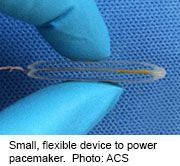 Written by Amy Norton
Scientists say they’ve taken a first step toward creating a pacemaker that runs on the heart’s own energy rather than batteries.
Pacemakers are electronic devices implanted to regulate your heartbeat — usually because of a condition that slows your heart’s normal rate. Traditional pacemakers have two parts: a battery-powered pulse generator implanted under the collarbone, and insulated wires that connect it to your heart. Read more.
Monkeys With Superpower Eyes Could Help Cure Color Blindness

Photo credit: Wired
Written by Adam Rogers
In the video, a preposterously cute, gray squirrel monkey named Dalton bonks his head against a computer screen in front of him. Wide-eyed and muttonchopped, Dalton has quite the setup—the screen, wide in squirrel-monkey terms, displays dots of varying sizes and colors. Below that is a monkey-sized basin, like a sink in a dollhouse kitchen remodeled with stainless steel fixtures. Read more.
Potential treatment for eye cancer using tumor-killing virus
Photo credit: iStock
Written by Hemant Khanna, University of Massachusetts Medical School
When most people think of the word “virus,” they often relate it to infections or diseases. The sole purpose of a virus is to attack and infect a normal cell, use it to replicate, and then kill it. Some examples include the flu virus and the deadly Ebola virus. Read more.
AIDS vaccine using engineered herpes virus works in monkeys
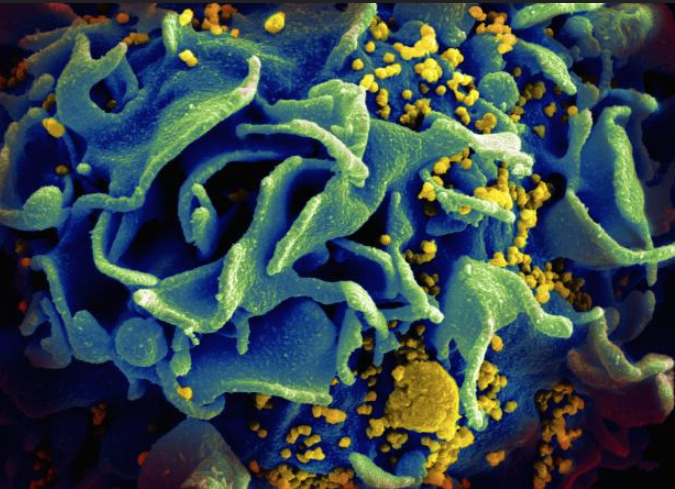
HIV infected T-cell (NIAID image) Photo credit: WNPRC
Written by Jordana Lennon
For the first time, scientists have used a genetically engineered herpes virus to achieve significant vaccine protection against the AIDS virus in monkeys. Only live attenuated strains of simian immunodeficiency virus (SIV), the monkey version of HIV, have previously provided similar protection. Read more.
Published January 31st, 2019 by Wisconsin National Primate Research Center
Moving Closer to a Stem Cell-Based Treatment for AMD
 Written by Dr. Francis Collins
In recent years, researchers have figured out how to take a person’s skin or blood cells and turn them into induced pluripotent stem cells (iPSCs) that offer tremendous potential for regenerative medicine. Still, it’s been a challenge to devise safe and effective ways to move this discovery from the lab into the clinic. That’s why I’m pleased to highlight progress toward using iPSC technology to treat a major cause of vision loss: age-related macular degeneration (AMD). Read more.
Published January 29th, 2019 by National Institutes of Health
Study: Sleep Deprivation Speeds Up Alzheimer’s Disease

Photo credit: Stock photo
Written by Claire Hansen
Experts have long warned about the negative effects of sleep deprivation, and new research suggests that people with Alzheimer’s disease may be particularly affected.
In a study of mice and humans, researchers at Washington University School of Medicine in St. Louis found that sleep deprivation increases levels of the protein tau, which is linked to Alzheimer’s disease. In follow-up studies in mice, the researchers also found that sleeplessness speeds up the spread of toxic clumps of tau in the brain, a precursor to brain damage and dementia. Read more.