AMP’s Home for Regular Updates Throughout the COVID-19 Outbreak

Throughout the COVID-19 pandemic, Americans for Medical Progress will use this webpage to provide regular updates and useful information to the research community and the general public. We invite you to bookmark this page. We also hope to offer an RSS feed in the near future. If you have requests for, or questions about content, we invite you to contact us via email.
Posted March 19, 2020
Johns Hopkins Breakthrough Opens the Door for Stem Cell Transplants to Repair the Brain
 In experiments in mice, Johns Hopkins Medicine researchers say they have developed a way to successfully transplant certain protective brain cells without the need for lifelong anti-rejection drugs. Read more.
Researchers find proteins that might restore damaged sound-detecting cells in the ear
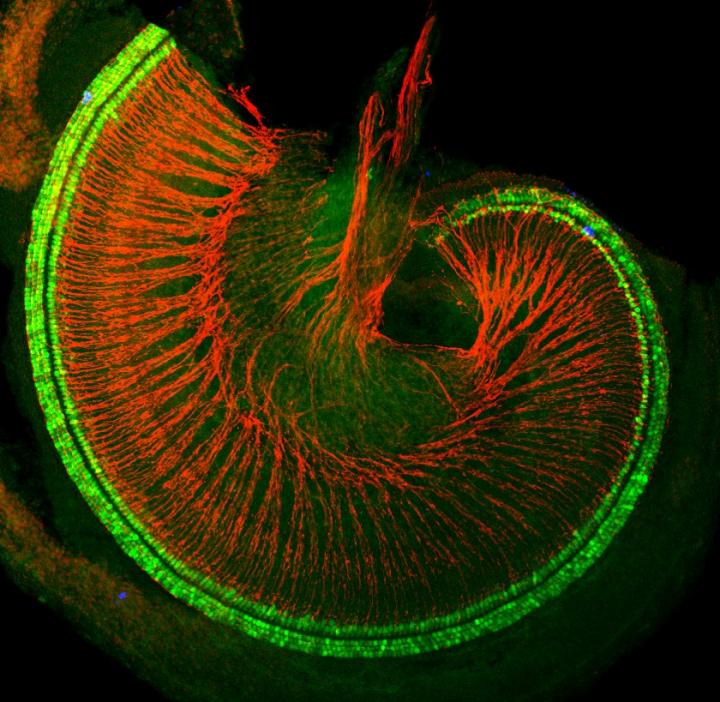 Using genetic tools in mice, researchers at Johns Hopkins Medicine say they have identified a pair of proteins that precisely control when sound-detecting cells, known as hair cells, are born in the mammalian inner ear. The proteins, described in a report published June 12 in eLife, may hold a key to future therapies to restore hearing in people with irreversible deafness. Read more.
Mouse, not just tick: New genome heralds change in Lyme disease fight
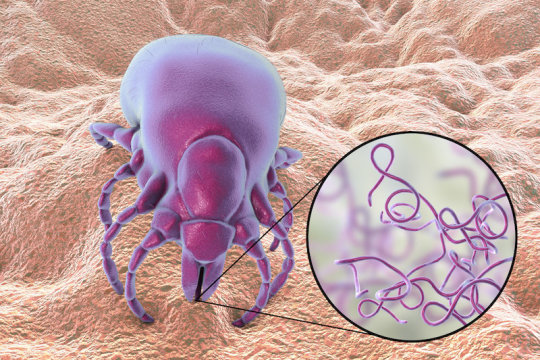 As Lyme disease increases, researchers have taken a significant step toward finding new ways to prevent its transmission. The experts, who include a pioneer in Lyme disease discovery, have sequenced the genome of the animal carrying the bacteria that causes the illness. The advance provides a launching pad for fresh approaches to stopping Lyme disease from infecting people. Read more.
Why Dogs Now Play a Big Role in Human Cancer Research
 The Cancer Moonshot initiative, launched under the Obama administration, was audacious by design: Supercharge cancer research to encourage innovation, with the mission “to end to cancer as we know it.”
Cancer researchers avoid using the word “cure.” From studying cancer at the molecular level, they know that tumors are complex—even personalized. There’s no simple cancer and no single cure. So, no single destination for a “moonshot.” Read more.
Cause of hardening of the arteries—and potential treatment—identified
 A team of UK scientists have identified the mechanism behind hardening of the arteries, and shown in animal studies that a generic medication normally used to treat acne could be an effective treatment for the condition. Read more.
Disrupted Gut Microbiome Promotes Breast Cancer Spread In Mice
Written by Victoria Forster
 The health of the gut microbiome has been linked with numerous diseases from depression to multiple sclerosis and even cancer and response to cancer drugs including immunotherapies. Earlier this year, an ambitious $25 million project was launched to determine the role of the microbiome in colorectal cancer, but perhaps more surprisingly, a new study in mice has linked the health of the gut microbiome to the spread of breast cancer. Read more.
Researchers identify faster, more effective drug combination regimens to treat tuberculosis
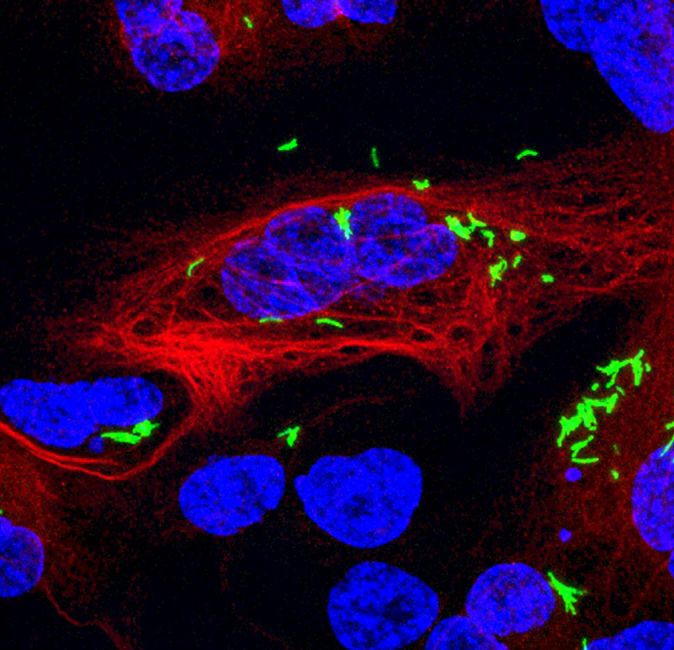
Human white blood cells infected with tuberculosis bacteria, shown in green. Photo credit: UCLA D.L. Clemens
Written by Enrique Rivero
Tuberculosis is a potentially deadly though curable disease. Each year about 10 million people develop active cases, and 1.6 million people die. In addition, about 1.7 billion people around the world are infected with TB bacteria, which can lie dormant for weeks to years, then become active and cause disease in up to 10 percent of those who are infected.
Today, people who contract tuberculosis typically take a course of drugs for six to eight months. However, the length of treatment means some patients don’t stick with the therapy or may develop adverse effects from drug toxicity. Some may develop resistance to the drugs, requiring changes in the drug regimen that can lengthen the treatment to as long as two years. Even worse, there is a high fatality rate among those with drug-resistant TB. Read more.
Major step towards individual cancer immunotherapy

T cells (left) become active in the body only when they recognise a peptide (blue, centre) located on one of the immune system’s sentinel cells (right). The ETH scientists repurposed sentinel cells in such a way that they indicate which peptides the T cells recognise. Photo credit: MedicalXpress/Science Photo Library / Keith Chambers
Medicine has great hopes for personalised cancer immunotherapy. The idea is to have a vaccine prompt the immune system to fight a tumour. Scientists at ETH Zurich have developed a method that allows them to determine which molecules are suited to patient-specific immunisation. Read more.
On The Frontier Of An Alzheimer’s Cure

In mouse brains stained for the presence of amyloid, much less is visible in the cortex of a mouse treated with sensory gamma stimulation (right) than in a mouse left untreated (left). Credit: Picower Institute for Learning and Memory/MIT – Photo credit: Science Friday
Alzheimer’s disease is known for inflicting devastating declines in memory and cognitive function. Researchers are on the hunt for treatments are taking a number of approaches to slowing or preventing the neurodegenerative disease, including immune therapy, lifestyle changes, and targeting sticky buildups of proteins called amyloid beta. Read more.